Hiring season is in full swing and lots of applicants are feverishly working hard to make themselves marketable. I like interviewing several applicants because it gives me the opportunity to find the best employees for our campus, but it also gives me an opportunity to learn. I am always looking for new ideas for instruction, assessment and intervention. I also look for new ways to strengthen our collaborative culture. There are ideas and strategies that campuses and universities are using that I have yet to discover and the only way to learn about these ideas is by interviewing products of their organizations.
Before I begin the interview, I always give the applicant an overview of our campus and the systems that pertain to the questions that I will ask. I think that is important because I want see how the applicant thinks within our system and what types of ideas the applicant has that can be added to our system. The key to interviewing is designing questions in such a way that elicits the applicants beliefs and experiences. In short, interviews are a kind of scavenger hunt. You never know what you are going to find. You may find the next teacher of the year, the next idea that could solve the biggest problem on your campus or even better, you may find both in the same person.

Saturday, May 26, 2012


Saturday, May 19, 2012
Are You Counting Down the Days or Making the Days Count?
There are less than 10 days of school left. The kids are counting down the days. Adminstrators, teachers and parents are counting down the days. Are you counting down the days or strategically using every day to prepare for an excellent year next year? Right now is the time to reflect on everything you have done this year, but more importantly, it is the perfect time for your staff to collaboratively reflect on everything that they have done as well. Soliciting input is critical for getting a head start on next year. Now is the time for spring cleaning. The things that we must reflect on and revamp is our meeting norms, intervention strategies that worked best, and what instructional tools were our very best for all kids.
One tool that our staff is using is DuFour's "Learning by Doing" book and using the Critical Issues for Team Consideration survey on pg 130. This survey instrument is excellent for our teams to evaluate where they are on their PLC journey. We have 8 PLC teams that will submit their survey data and from there, our campus will determine where we must focus as a campus for next year as well as what areas each team has decided to focus on next year. This valuable tool helps us decide if we are collaborating in the right ways and on the right things. It helps us set our norms for how we will work together in a more effective, efficient and focused manner. We are able to see if our instruction, assessments and interventions are aligned with the district curriculum as well as state standards. By using this instrument, teams are able to clarify the goals and norms that they will have next year. This is a great use of time since the beginning of the school year often doesn't yield enough time to properly develop goals and norms.
In addition to tightening our norms and systems, our teachers are working together vertically to create end of year assessments that will generate data and information to share with the next grade. Every student will walk into the next grade in August with data that is tied to the prerequisite skills needed for the grade that they are entering. Each teacher will know what prerequisite skills every student has and doesn't have at their command; therefore, the teacher has a head start at the beginning of every unit or lesson and can intervene immediately.
Spring cleaning is hard work, but if you spend the time in a proactive manner, you will save months of time that would otherwise be wasted cleaning up messes in the fall. Have a great summer.
One tool that our staff is using is DuFour's "Learning by Doing" book and using the Critical Issues for Team Consideration survey on pg 130. This survey instrument is excellent for our teams to evaluate where they are on their PLC journey. We have 8 PLC teams that will submit their survey data and from there, our campus will determine where we must focus as a campus for next year as well as what areas each team has decided to focus on next year. This valuable tool helps us decide if we are collaborating in the right ways and on the right things. It helps us set our norms for how we will work together in a more effective, efficient and focused manner. We are able to see if our instruction, assessments and interventions are aligned with the district curriculum as well as state standards. By using this instrument, teams are able to clarify the goals and norms that they will have next year. This is a great use of time since the beginning of the school year often doesn't yield enough time to properly develop goals and norms.
In addition to tightening our norms and systems, our teachers are working together vertically to create end of year assessments that will generate data and information to share with the next grade. Every student will walk into the next grade in August with data that is tied to the prerequisite skills needed for the grade that they are entering. Each teacher will know what prerequisite skills every student has and doesn't have at their command; therefore, the teacher has a head start at the beginning of every unit or lesson and can intervene immediately.
Spring cleaning is hard work, but if you spend the time in a proactive manner, you will save months of time that would otherwise be wasted cleaning up messes in the fall. Have a great summer.
Tuesday, April 10, 2012
The Cure for Can't-swer
Whether you can or whether you can't, you're absolutely right.
What is Can't-swer?
It is the state of mind where our words, responses, and attitude tell ourselves that something is impossible. This state of mind preserves the status quo and kills innovation.
What causes Can't-swer?
There are lots of things that can lead people to develop can't-swer, but the main reasons that this plague cripples people are the following:
- Lack of knowledge
- Lack of passion
- Lack of commitment
- Lack of ability
Any of these issues can cause doubt, fear, and uncertainty, but ultimately these underlying symptoms drive people to verbalize their believe that they are incapable of making growth.
What's the Cure for Can't-swer?
There are three simple mindsets that are crucial to stop this affliction to one's ability.
1. The Mindset of Believing
The first step to overcoming can't-swer is to believe that all things are possible. Just because you have not seen something does not mean it cannot happen. We live in a world where we must see things before we can believe they exist. Strong minds with a passion for new opportunities believe in possibilities long before they can see them.
2. The Mindset of Seeing
Once you believe something can exist, and you are passionate about it, then you are ready to develop action steps to make it happen. This is probably the hardest step to beating can't-swer because creating action steps does take a lot of time, creativity, as well as trial and error. This is where a lot of people give into can't-swer, but this is also the place where survivors' will-power wins the game.
3. The Mindset of Action
Procrastination is one of the biggest indicators that you may have can't-swer. Getting started on your action plan and taking risks are great ways to ensure that this plague does not stop you. When encountering obstacles or problems along the way, it is critical to just keep moving. Action will stop can't-swers from coming out of your mouth.
How can We prevent Can't-swer?
The interesting thing about can't-swer is that it is a communicable disease. By allowing ourselves to be corrupted by coworkers, colleagues, and others who are afflicted by this disease, we stand a strong chance of contracting the disease ourselves. Surround yourself with positive people, and you will quickly find that can't-swers never come from their mouths. Problem-solve with people who are innovative and creative, and you will quickly see that they don't allow the word, can't, to be a part of the vocabulary. A culture of true collaboration is like sunscreen to the skin. It blocks harmful UV rays from damaging the body.
The More You Know
Can't-swer is preventable. The more you learn how to be positive, opportunistic and innovative, the greater the chance you will never have to deal with this issue. Another key consideration is to be extremely conscious of your attitude and your responses in difficult situations. This is a really good place for can't-swer to take root in your work and your life. Finally, if you can avoid contracting this disease of deplorable desperation, you will make a huge impact on yourself, your coworkers, and your organization as a whole.
Thursday, March 15, 2012
The 3 Lifesavers in Education Today
As a kid, I loved eating Lifesavers. The variety of different flavors and colors still melt in my mouth today. When I think of Lifesavers, I feel good, but that feeling quickly dissipates just like the candy. It eventually disappears, and I go about my normal routine.
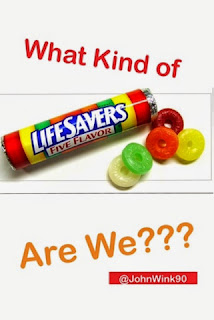 This kind of lifesaver is not really a lifesaver at all. It's a feel-good lifesaver. When they are reminded about their moral responsibility in saving the lives of all students, they pop that thought into their head like a real lifesaver candy and say to themselves "oh yeah, I'm supposed to be doing that." They instantly feel good about themselves, but as soon as another thought enters their head, they have forgotten all about saving kids. That's because their commitment to being a lifesaver lasts about as long as a piece of candy in their mouth.
The same idea applies to how we view education. Do we view it in the same way as the movies do? (See Bill Ferriter's post, Movie Teachers send the Wrong Message) Do we see it as a noble contribution to humanity, or do we go further and view it as the ultimate opportunity to save lives? I would say most of us see ourselves as lifesavers and gamechangers, but when it comes down to it, just how much life-changing do we really do?
Lifesaver Challenge...
There are 3 kinds of lifesavers. Which one are you?
Lifesavers Candy
 This kind of lifesaver is not really a lifesaver at all. It's a feel-good lifesaver. When they are reminded about their moral responsibility in saving the lives of all students, they pop that thought into their head like a real lifesaver candy and say to themselves "oh yeah, I'm supposed to be doing that." They instantly feel good about themselves, but as soon as another thought enters their head, they have forgotten all about saving kids. That's because their commitment to being a lifesaver lasts about as long as a piece of candy in their mouth.
Lifesaving Buoy
These lifesavers know it is important to save the lives of the kids that they are working with. They know to be on the lookout for students who are struggling and throw them a life preserver, but beyond saving the struggling swimmer, this type of lifesaver doesn't have much more to offer. Their responsibility is ethical. They know they must save kids and they make an effort, but they also believe that it is someone else's responsibility to save the "really low" students. The idea of "whatever it takes" starts with rhetoric and stops with deep commitment.
Lifesaving Professionals
This type of lifesaver is not limited by the title of their position. There moral responsibility takes them where "whatever it takes" leads them. Going beyond the scope of their job, these lifesavers do great and amazing things to save kids. Their creativity and innovation designs prescriptive supports to ensure that no student slips through the cracks on their watch. Furthermore, these lifesavers inspire students and equip them with the tools to save themselves.
Which Lifesaver are You?
So which lifesaver best identifies with you? Is your commitment to saving kids as weak as a piece of candy or as strong as a surgeon. Are you somewhere in between? No matter where you are, you were built to save kids and the only thing that limits us all is our self-confidence in our own abilities and the realization that everything we do has the potential to save a life.
Monday, February 20, 2012
4 Ways to Get the Lead out of your #Leadership
 Every leader aspires to be a great leader. We talk about leadership. We study leadership. We boast about the importance of leadership. We all know that the difference between successful organizations and unsuccessful organizations lies in leadership and leadership alone.
The problem is that there are two kinds of leaders, real leaders and lead – leaders. No, I'm not talking about lead as into lead an army. I am talking about lead as in the type that weighs down the organization, or they need to get the lead out of their behind. Both real leaders and lead-leaders lead, but there are some distinct differences in how they get the job done.
Lead-Leading vs. Real Leading
Here's a table of of Lead-Leaders and Real Leaders employs limits, model by example, use action and create a disciplined organization. As you will see, there is a vast difference between the two leadership styles and their impact on the organization.
Indicator
|
Lead-Leaders
|
Real Leaders
|
Limits
|
Impose
limits on the things that followers can do.
|
Identify
organizational limits and enlist followers to problem-solve for opportunities
to overcome limitations.
|
Example
|
Fail to model the example
that they expect their followers to emulate.
|
Know that the only way
that organizations can improve is based solely on the example that leaders
set every day. Real leaders lead by setting the example and modeling it in
everything they do.
|
Action
|
Have only one action,
reaction and it use starts from behind their desk.
|
Are active. They are
involved in all facets of the organization, in building improved lines of
communication and by constantly being proactive as they seek out potential
problems.
|
Discipline
|
See
discipline as their primary form of influence to make followers comply with
expectations.
|
Are self-disciplined and
help the organization become more disciplined as well by keeping everyone
focused on the most critical things that will ultimately make the
organization successful.
|
So which are you?
Leadership is probably the most over-defined yet most misunderstood concept in our culture. Everyone wants to be the leader, but few want to take the heat when scrutiny rears its ugly head. Real leaders do not vie for leadership. They are compelled to assume it. They're not obsessed with the power that it brings, but in the potential that it possesses.
Lead-leaders want the job and the fancy chair that goes with it. Their goal is to get the position and do what it takes to keep it, and typically that generally lies in preserving the status quo. In essence lead-leaders weigh down the organization by not allowing it to flourish and grow.
So which one are you, a real leader or a lead-leader?
Tuesday, January 10, 2012
4 Secrets to End Confrontations with a Smile
The touchiest and most uncomfortable of situations is most certainly confrontation. Discomfort permeates the confronter, while pain and discomfort overwhelms the confronted. After the dust settles, hard feelings remain.
The buck always stops with the leader, and with that comes the responsibility of holding others accountable. Accountability is not always positive, but it is a key requirement of leadership. Whether you serve as a teacher leader, campus leader, or district leader, the work of moving people forward requires us all to confront people who fail or refuse to move forward.
Here is where the problem begins. Leaders screw up confrontation when they confront people in a way that makes them feel like the confrontation is about the person instead of the behavior or issue at hand. In order to make confrontations successful, leaders need to consider 4 secrets if they want to successfully address and redirect the behavior.
1. Tone
Tone makes up 90% of our communication; therefore, we need to make sure that our tone is positive and supportive while at the same time direct. The confronted must receive our message in such a way that doesn't allow them to perceive that the communication within our message is negative or aggressive in manner.
2. Why
State the issue that is being confronted and why the confrontation is necessary. The person being confronted deserves to know how their behavior affects others. Preserving consistency, maintaining order and promoting a positive culture are pretty important reasons to hold people accountable.
3. Rapport
Maintaining rapport is the goal during confrontation, but it's not always attainable. Irrational people typically take confrontation personally no matter how hard we try, so sometimes the less said is the best said. In difficult situations, it is critical to simply state the issue, correct it, ask for questions or clarification, and move on.
4. Close
Confrontations can grow more negative the longer they take. Once we have addressed the issue, we need to close the confrontation by thanking them for their time, acknowledging the discomfort and encouraging hope for moving forward. Taking time to close the confrontation maintains the dignity of the confronted and offers opportunities for both parties to ensure that the relationship can be maintained.
Confrontation with a Smile
Confrontation should never be about disrespect or flexing supervisory muscle, but it must always be about consistently maintaining the dignity of the entire organization. If the leader confronts all in the same positive way every time, the message is clear that the leader cares most about improving the organization while preserving a focused culture. If leaders can make confrontation about moving people forward rather than correcting people, they will always be able to do it with a smile. Smiles will always have a better chance of emerging from all parties because confrontation will not be about condemning people but improving them, and that is something all of us could use when we are being confronted.
Subscribe to:
Posts (Atom)